How to Get Kids Off Screens: Simple Tips and Fun Screen-Free Activities

How to Get Kids Off Screens: Simple Tips and Fun Screen-Free Activities

Wondering how to get kids off screens without a daily battle? You're not alone. Kids 8 and under now spend about 2.5 hours a day on screens. That's according to the Common Sense Media 2025 Census. For older kids, that number usually climbs even higher.

Screens aren't the enemy. They help kids learn, relax and stay in touch with friends. The goal is balance, not a ban. In this guide, you'll find realistic screen time limits and tips to switch off without tears. You'll also find plenty of screen-free activities kids actually enjoy.

How much screen time is too much for kids?

How much screen time is too much for kids?

The World Health Organization recommends no screen time for children under 2, apart from video calls. For kids ages 2 to 4, it suggests no more than one hour a day. The American Academy of Pediatrics encourages families to create a family media plan that fits each child's age.

For school-age kids, quality and context matter as much as minutes. A video call with grandma is not the same as an hour of autoplay videos. Ask yourself a few simple questions:

  • Does screen time get in the way of sleep, homework or physical play?
  • Does your child struggle to stop, or feel upset afterward?
  • Is there still time for family, friends and offline activities every day? If the answers worry you, it's a good moment to reset your family's screen time for kids. Small, steady changes usually work better than a sudden screen ban.

How to get kids off screens without a fight

Knowing the limits is the easy part. Getting kids to actually put the tablet down is harder. These steps help you set clear rules, avoid meltdowns and build new habits that last.

Set clear, predictable screen time rules

Kids handle limits better when they know them in advance. Sit down together and agree on a few simple rules. Write them down and post them on the fridge.

  • Screen-free zones: keep the dinner table and bedrooms screen-free.
  • Screen-free times: no screens during meals or in the hour before bed.
  • Clear daily limits: decide how much screen time fits your family's routine.
  • "First, then" rules: homework, chores and outdoor play come first, then screens. Predictable rules mean fewer negotiations. When the routine is the same every day, kids stop pushing the limits as often.

Make the switch-off easier

Most screen battles happen at the moment you say "time's up." A little preparation makes that moment much calmer.

Give a warning a few minutes before the end, and use a visual timer for younger kids. Let them finish the episode or the level, so they stop at a natural break. Then offer a clear next step: "The tablet is off, let's go build a fort." A ready-made "trade-out" activity makes the switch feel less like a loss.

If your child gets upset, stay calm and name the feeling: "I know it's hard to stop when you're having fun." Then hold the limit kindly. Consistency teaches kids that tantrums don't change the rules.

Be a screen-free role model

Kids copy what we do far more than what we say. If you want them off screens, they need to see you off yours too.

Put your phone away during meals, playtime and bedtime stories. Try device-free family dinners, and share one good moment from each person's day. Tell your kids when you're setting limits for yourself. It shows them that managing screen time is a skill for everyone, not a punishment.

Use parental controls as a backup

Parental controls don't replace family rules, but they can help. Most iPhones, iPads, Android, Google devices and game consoles have built-in tools. You can set daily limits, schedule downtime and block certain apps.

This is a simple way to limit screen time for kids without becoming the "bad guy" every evening. Explain how the settings work, so kids understand the limits instead of trying to beat them.

Screen-free activities for kids that can actually compete with screens

Screen-free activities for kids that can actually compete with screens

Here's the secret most parents discover: kids don't just need fewer screens. They need better things to do. The best offline activities give kids the same things screens do: fun, challenge, rewards and connection.

Many parents notice the same pattern. When kids have exciting plans, they ask for screens far less often. That's why the best screen time for kids strategy is not only about saying no. It's about saying yes to something better. Keep a short list of screen-free activities for kids on the fridge, so everyone can pick one when boredom hits. Parents can add ideas too, and kids love crossing them off.

Active play: get them moving

Physical play burns energy, lifts the mood and makes it easier to say goodbye to screens. Try these ideas:

  • Head to the park, the playground or a new trail in your area.
  • Ride bikes, scooters or roller skates around the block.
  • Set up a backyard obstacle course or a family relay race.
  • Play tag, frisbee, soccer or a quick game of catch.
  • Put on music and have a dance party in the living room.

Make it social when you can. Inviting a friend over is often the fastest way to make kids forget about the tablet.

Creative and quiet play

Not every screen-free activity has to be loud. Quiet, creative play helps kids slow down and focus. Keep a box of supplies ready, so starting is easy.

  • Build with blocks, Lego or cardboard boxes.
  • Draw, paint or make a comic book together.
  • Read together, or listen to an audiobook while doing a puzzle.
  • Cook or bake a simple recipe as a family.
  • Play board games and card games on a family game night.

On wet weekends, our guide to rainy day activities for kids has dozens more offline activities to try.

Indoor climbing at HAPIK: a screen-free adventure

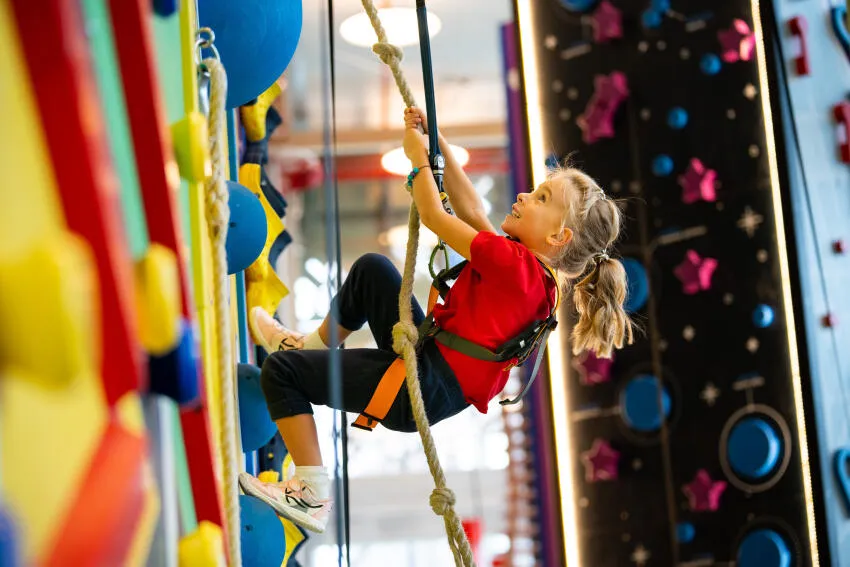
Screens are hard to beat because they offer quick wins and a new level to unlock. Climbing offers the same thrill, without a screen in sight. Every wall is a new challenge, and reaching the top feels like winning a game.

At HAPIK, kids climb colorful walls HAPIK and vertical challenges designed for all levels. First-timers can start on beginner-friendly walls, and confident climbers can push to harder routes. The walls use auto-belay systems, so kids can try again and again at their own pace. Some centers also offer a ropes course and the XPlorer climbing game, which turns climbing into a physical, team-based quest.

Climbing builds strength, focus and confidence. It's also a great family activity, since parents can climb too. To turn it into a weekly screen-free habit, ask about HAPIK's monthly membership. A regular climbing session gives kids something to look forward to that doesn't involve a screen.

You'll find HAPIK centers in Brooklyn and Yonkers (New York), East Rutherford in New Jersey, Garland near Dallas (Texas) and South Gate in Los Angeles (California). Book a climbing session at HAPIK and see how quickly kids forget about their screens.


👉 Swap screens for climbing walls

Put the devices down and let the kids (and parents!) climb, play, and explore. At HAPIK, screen-free time means active fun for the whole family. Book your session today!

Special situations: after school, video games and older kids

Some moments are harder than others. Here's how to handle the most common screen time struggles.

After school. Many kids reach for a screen as soon as they get home. Plan a simple routine instead: snack, outdoor play or homework first, then screens. Keeping devices out of sight until then helps a lot.

Video games. Games are designed to keep kids playing, so stopping can feel unfair. Agree on limits before the game starts, and stop at the end of a level or match. Encourage games that kids play together in the same room, and balance them with active play.

Tweens and teens. Older kids push back on rules they didn't help create. Involve them in setting limits, and explain the reasons behind each rule. Ask them to suggest their own offline activities, from sports to clubs to climbing with friends. If you're worried about your child's screen use, mood or sleep, talk to your pediatrician. They can give advice that fits your child.

In a nutshell: less screen time, more real-life fun

Learning how to get kids off screens is not about perfection. It's about small, steady changes: clear rules, calm transitions and better offline activities. Start with one new habit this week, like device-free dinners or a screen-free Saturday morning.

The more fun kids have away from screens, the less they'll miss them. Ready for a screen-free adventure the whole family will love? Book a climbing session at HAPIK today.

You might also like:

Kids Birthday Party Ideas: Beyond the Ordinary Celebration

Kids Birthday Party Ideas: Beyond the Ordinary Celebration

Searching for kids birthday party ideas that go beyond cake, balloons and the same old games? In this guide, you'll find active party venues, easy at-home and budget-friendly ideas, and tips to choose the right format for every age.

Rainy Day Activities for Kids

Rainy Day Activities for Kids

Looking for rainy day activities for kids that actually beat boredom? A gray, wet day doesn't have to mean cranky kids and endless screen time.

Fun Team Building Activities: Fresh Ideas Beyond the Usual Options

Fun Team Building Activities: Fresh Ideas Beyond the Usual Options

Looking for fun team building activities your team will actually enjoy? In this guide, you'll find a mix of quick icebreakers, outdoor and offsite ideas, and active adventures. Tteam building doesn't have to feel like extra work.

Frequently asked questions

Got a question? We'll answer it

  • The WHO recommends no screen time under age 2. For ages 2 to 4, it suggests no more than one hour a day. For older kids, focus on balance: screens shouldn't replace sleep, homework, physical play or family time.
  • Set clear rules in advance, give a warning before time's up and let kids stop at a natural break. Offer a fun next activity right away. Stay calm and consistent, even when your child is upset.
  • Try active play outside, crafts, building, reading, board games or cooking together. Indoor climbing is another great screen-free activity, especially when kids need to burn off energy.
  • Create an after-school routine: snack, homework and outdoor play come first, then screens. Keep devices out of sight until then, and have a few easy offline activities ready.

If you have more questions, please contact us..

Contact us